Tales from outer turnip head...

Tales from outer turnip head...
Showing posts with label news. Show all posts

Sunday, March 15, 2015

"If it bleeds... it leads." If it heals... what?

"I do not take s single newspaper, nor read one a month, and I feel myself infinity the happier for it." —Thomas Jefferson: I didn't read the news much when I was younger. I didn't have the patience to read material that did not develop characters and plots, lead me off to other worlds, or suspend my notion of reality. I read the news much more now, advise the school newspaper, and supervise a news writing class. I am struck by how often I feel saddened after reading the news. The worst is when I feel like the town gossip, tuning into news that is not terribly relevant to me, but outlines the strife of locals I might know or have a loose connection to. At best I feel informed about important events that DO shape our world BUT makes me think so much about things I often have little control over. News often—and for good reason—deals with conflict and tragedy. Positive news  exists, but is harder to come by. It often feels like contrived, feel-good moments, appropriate for the FaceBook feed (sigh) and not the pages of the Times, Post, Journal, Herald, etc. Attempts at "good news" sites border or click-bait and unsupported hokey moments. Are all the best "good" stories reserved for cinema? Maybe. Only when the good news is extraordinary does it lead (think discoveries, breakthroughs, missions to space, etc.)


We firemen know about news: When a fire has started, and the local fire department is unable to get there in time, the story is dramatic and makes the news. What a tragedy when someone loses their home (safety) and belongings (memories). The work is exterior work, hard and full of flame, but not as dangerous as one might think. When a fire starts in one room, progresses slow enough for us to get there in five minutes,  attack lines at the source within ten, walls opened, secondary searches for extension within fifteen to twenty, and full extinguishment established within thirty or less, we rarely make the paper. Interior work is often more dangerous than exterior—the risk greater, the reward greater. I feel a sense of failure when we are forced to move from interior to exterior, from offensive to defensive maneuvers. It's evidence that the fire had the advantage, and so we retreat to defensive positions, conceding the territory in the name of protecting against further spread. When we "make a stop" on the other hand, it is a result of a coordinated attack.

Christmas day some years ago at a home somewhere in my town: A family had gone out for a while, leaving a warm home filled with the remains of a child focused Christmas morning. A fire located in a wood stove moved into the wall, and eventually spread, spanning two floors. The alarm went out and we moved with all haste. The first responding firefighters arrived ahead of the trucks. They rushed in with personal extinguishers, holding their breath, buying a few precious minutes for the hose team to advance a minute or so later. [Did you know that fire can double its size every minute. The law of doubling is frightening when you think on it. Quick response is essential for stopping fire.] A saw crew artfully opened the wall, and we used low volumes of water to stop a fire that was working on two rooms now. The result: the family spent one day at a local hotel and their house had minor smoke damage. The structure was sound, easily repaired, and  a young child's gifts were safe and waiting for him the next day. No one was hurt.

Shameless "Selfie" from Training
It was a massive victory with a happy ending. No news. It was the product of lots of training and good communication. It was "what we do".

And then there are days... When a business on Main Street burns down due to huge fuel load and starting in the wee hours of the morning, moving through multiple rooms before tripping any alarms denying us any chance to win the initial assault, it's front page material.

A story where everyone does their job correctly and successfully is not news, it's "everyday". "Airline captains successfully landed their Boeing 747 at Logan Airport today after departing on time from LAX this morning." When "everyday" events shift to the extraordinary, we have news. It makes sense, but sends the wrong message to the brain if all we read is the extraordinary...

"The solution to pollution is dilution...": I am not sure what the answer is for this beyond blogging about it, looking for ways to find balance and supporting that balance—trying to share click-worthy elements while avoiding the click-bait trap that often lies close. I am not happy with much of the fluff I seem to get when I go to the Huffington Post, but they are trying to find their way (of course they are trying to make money, but maybe they will do so by finding interesting stories and not by merely using sensational headlines to get to pointless observations of celebrity "snews"). NPR covered their attempts  to seek the positive in this article:

http://www.npr.org/2015/02/06/384341190/huffington-post-bets-people-will-read-good-news-and-share-it-too

I love Pizza... I really do: Real stories that move us should be shared, we should be discerning about what we push though. Here's my attempt at offing a positive story about people being people. It is not news. It just is. The economic model presented is not going to change anything, but a few thousand dollars on the bottom line, and there seems to be lessons about giving fish and teaching people to fish that I wish to avoid here. But if viewed as a story about people looking for a way to improve the world they live in—albeit in a micro-transation like a slice of pizza—it is extraordinary, and therefor, news. I just got a smile from this UpWorthy piece, and offer a simple piece of goodness with the hopes it might provoke others to look for their own "Pay it Forward" moment:





Sunday, November 9, 2014

Division and healing...

So I think I'm in for a potentially dark trip this week. Fire Calls in the wee hours followed by some reasonably bad nightmares in the early morning, shortening daylight hours, dropping temperatures, the end of the first academic quarter with reflections on academic experiments, and the desire to make a weekly blog work feel like a press this morning. And yet there is warm bit of rose in the black and white scratches of a drawing of my November melancholy that feels like hope despite all the rest.

The soundtrack for the moment is The church: Destination. The text is DMZ by Brian Wood. The events are Civil War Heroes, Terrorism, and The Berlin Wall: 25 Years Later.

The Soundtrack: The Church Starfish, 1988, Track 1. Destination: 

Our instruments have no way of measuring this feeling
Can never cut below the floor, or penetrate the ceiling.
In the space between our houses, some bones have been discovered,
But our procession lurches on, as if we had recovered.

Draconian winter unforetold.
One solar day, suddenly you're old.
Your little envelope just makes me cold,
Makes destination start to unfold.

Our documents are useless, or forged beyond believing.
Page forty-seven is unsigned, I need it by this evening.
In the space between our cities, a storm is slowly forming.
Something eating up our days, I feel it every morning.
Destination, destination.

It's not a religion, it's just a technique.
It's just a way of making you speak.
Distance and speed have left us too weak,
And destination looks kind of bleak.

Our elements are burned out, our beasts have been mistreated.
I tell you it's the only way we'll get this road completed.
In the space between our bodies, the air has grown small fingers.
Just one caress, you're powerless, like all those clapped-out swingers.
Destination, destination.


The Text: I am just finishing DMZ by Brian Wood. I have only a few issues left to go. What started as a way to pass the time has developed into a pretty thought-provoking story told through a journalistic lens and moved with often very stimulating art by Riccardo Burchielli and many guest artists.

DMZ is an American comic book series written by Brian Wood, with artwork by Wood and Riccardo Burchielli. The series is set in the near future, where a second American civil war has turned the island of Manhattan into a demilitarized zone (DMZ), caught between forces of the United States of America and secessionist Free States of America. (Wikipedia).

In his article The Civil War Has Begun. It’s on Park Avenue   George Gene Gustines of the New York Times offers a brief summary of the Novel (which finishes in about 75 issues over ten years of release). 
"At the center of DMZ, which is published by Vertigo, an imprint of DC Comics, is Matt Roth, who begins the series as an ill-informed, unmotivated, 20-something photo intern for the Liberty News television network. He accompanies an award-winning journalist into Manhattan, but their helicopter is shot down near the Bowery and Delancey Streets, and Matt is stranded. That’s when he begins to learn that the reports about Manhattan — only insurgents remain, rats and pigeons are the main food source — are propaganda. Matt decides to stay and document the struggle for survival among the remaining residents, the diehards who will not leave and the unlucky who could not cross the bridges before they were sealed.(www.nytimes.com)
As the story develops—what started as an implausible, and at times silly, over-drama of NYC laying at the center of a civil war—the reality of possible division in any nation is drawn ever more realistically, focusing on the the people who are swept by the tides of events that seem out of their control. I do not worry about our civil war, but am saddened by the divisions that lie around the globe and wish instead to look to the healers, the patchers, the middle-ground finders—the leaders who are often rejected in the moment by passionately angry opposing sides and discovered by the masses only when the fatigue of conflict overtakes them.


Civil War Heroes: Congress recently approved awarding a Medal of Honor 151 years after the fact. Read the story here at BBC and NYT. The quote that I took away from the story is from President Obama:
"This medal is a reminder that no matter how long it takes, it is never too late to do the right thing."
I am not sure I agree that it is never too late to do the right thing, but I know that even if we are late we need to do the right thing. Healing takes time. We are still healing our civil war. I am not sure how much posthumous medals aid in that process, but the conversations of why we fought and how we heal are important to what we are as a nation. Relationships take work to remain healthy. Ours is an experimental relationship in the form of a representative democracy. It can be messy and contentious. It can be madding and rife with bitter pills of compromise and even corruption. But we struggle on to adapt a system to meet our needs. As long as we have our principles and heroes, and questioners and readers, participants and dreamers, I think we will continue to be all right. It just takes time to heal when we botch it all up.


Terrorism: The nature of terrorism is to create change though fear. We fear what we cannot see or understand. When violence comes from un-uniformed attackers and is directed at people who do not train to be ready for attack, we feel violated. And it is a violation. While all war is violation, terrorism seems to be several notches higher on the scale to me. I wonder if civil war feels similar. We study brother fighting brother, people who are often divided by fewer differences than the majority of the global conflicts we study. Does violence done to "the other" who is so similar to us harder than violence to the "the other" from afar? Do we hurt those closest to us worse than those who are distance because we are so much more reticent to engage our own kind? Or do we jump in so much faster when we can easily separate ourselves from "the other". A friend of mine teaches an enduring understanding: "What we can separate we can violate." The logical and ethical conclusion is to follow up with the lessons on how we mend, heal, and join, to prohibit the separation that so often precedes the violation.

And it can be done...


The Berlin Wall 25 Years Later: I was born in Baltimore. My grandfather was born in Germany. Some of my people are from parts of the world that I used to call East Germany. I was told at one point when I was in early high school that I would never really have the chance to visit where my ancestors came from. I felt a pretty deep sadness about this and took to heart stories I heard about the walls of Germany and the camps of WWII, of people signaling each other across the divides. An so I was glued to the TV in 1989 when I watched video clip after video clip of German kids clamoring on a wall that was the most fortified structure I knew as a kid. There were dog runs and roll wire fences, underground listening points and whitewashed walls, guard towers and spot lights, razor wire and mines. And these Germans were tearing it apart with their bare hands, sledgehammers, other parts of the wall.  I asked my father "We're watching history, aren't we?" He replied, "Yes, we are." They had become strangers, these Germans of East and West, but they have also been working on healing for 25 years now. The lines have blurred considerably. My students do not know of the sadness I had of a country divided. Such healing in one generation! It gives me a little hope...


Sunday, October 5, 2014

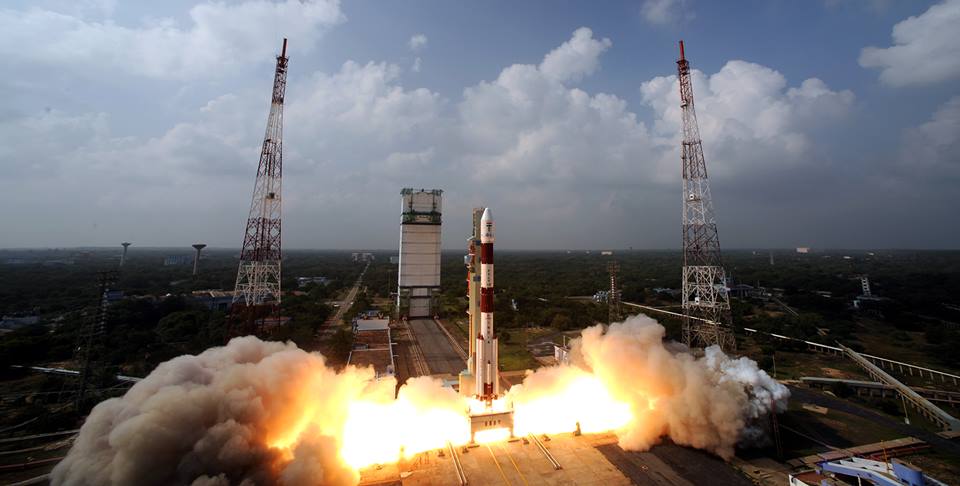
Mangalyaan...


From the NYT Opinion Pages, SEPT. 25, 2014:

"In successfully launching an orbiter to Mars this week, India’s space program demonstrated what’s possible when a determined group of people put their minds to solving a complex problem.

India’s Mangalyaan, or “Mars craft” in Hindi, is not the first orbiter to reach the Red Planet — the United States, the Soviet Union and the European Space Agency have previously achieved that feat — but it has done so in its first attempt and on a shoestring budget of $74 million. (NASA’s Maven mission to Mars cost $671 million).

Furthermore, India is the first Asian nation to reach Mars. The Indian satellite will remain in an elliptical orbit around Mars to study the planet’s surface and atmosphere.
" (Read the rest of the opinion here.)

I have had an interest in India ever since I lived there for a semester in 1992. I have had an interest in Mars since forever (actually, since my grade school classmate Benji Farr got me excited about space travel and Mars in particular). So when India gets into the Mars race, I get a little nutty!

Recently I picked up The Mars Trilogy (for the fourth time) by Kim Stanley Robinson. It paints an interesting and seemingly plausible future where the colonization of Mars is a possibility driven by necessity. The books focus on relationships of the "first 100" and the resulting multi-global politics that surround an overpopulation-driven land and resource grab. Here is an excerpt from Red Mars that speaks to the perspective of truly changing one's world view and hints at the wisdom that can be brought by time:

"Everything had changed, it seemed; the world and its civilization all grown vastly larger and more complicated. And yet there they stood nevertheless, all the oh-so-familier faces changed, aged in all the ways human faces age: time texturing them with erosion as if they had lived for geological ages, giving them a knowing look, as if one could see the aquifers behind their eyes. They were in their seventies now, most of them. And the world was indeed larger—"

The impulse to explore space costs a lot, even when done as cheaply as India's Mangalyaan. I have heard and read critics who believe that the effort is ill spent money. Out problems on Earth should trump NASA and others' experiments out there. And yet, what dreams are born with men and women risking so much to push the boundaries of where we have walked? How many kids yearn for the unknown places to be uncovered like a mystery box opened? Nobody expects little green men to leap out from behind a rock, but wouldn't it be cool to find a little lichen somewhere in a deep crevasse on the red planet? I found a website that attempts to show earthly technologies that have been improved or created as a result of our impulse to explore space. I have not vetted the list, but the items seem plausible enough to be extensions of NASA work that I have not felt the need to doubt the claims. Some of the items of note to me:
  • Light-Emitting Diodes (LEDs)
  • Infrared Ear Thermometers 
  • Anti-Icing Systems
  • Highway Safety Grooving
  • Improved Radial Tires
  • Land Mine Removal
  • Fire-Resistant Reinforcement
  • Firefighter Gear
  • Temper Foam
  • Enriched Baby Food
  • Portable Cordless Vacuums
  • Freeze Drying Technology
http://spinoff.nasa.gov/Spinoff2008/tech_benefits.html

It is good to dream and even better to cheer for those who live out our dreams. I have long said I would like to live to see someone step foot on Mars, felt crushed when the financial crisis on the 2000s forced NASA's Mars program to be severely scaled back, and now feel hope as India joins the effort.